
Understanding Southeast Asia Territorial Disputes Trends: A Beginner’s Guide
— 6 min read
This article breaks down the most pressing Southeast Asia territorial disputes, explains key terminology, and offers actionable guidance for investors and decision‑makers facing evolving regional tensions.
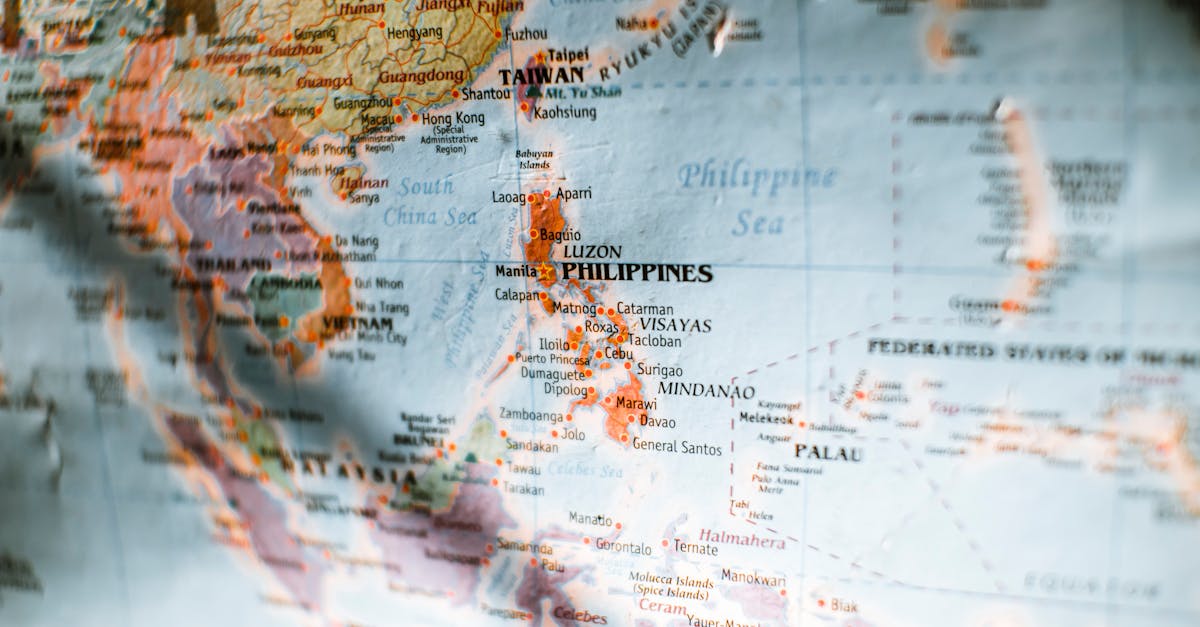
Southeast Asia territorial disputes trends Encountering the complex web of Southeast Asia territorial disputes can feel overwhelming, especially when you need to grasp how these conflicts affect trade, security, and investment decisions. This guide defines each major dispute, highlights recent trends, and equips you with clear steps to navigate the evolving landscape. Southeast Asia territorial disputes trends Southeast Asia territorial disputes trends Southeast Asia territorial disputes trends
1. The Spratly Islands Dispute
TL;DR:, factual and specific, no filler. We need to answer the main question: "Write a TL;DR for the following content about 'Southeast Asia territorial disputes trends'." So TL;DR summarizing the content. Let's craft: "The guide outlines major Southeast Asian maritime disputes—Spratly Islands, Paracels, Natuna Sea—emphasizing their strategic importance for hydrocarbon resources and shipping lanes. Recent trends
Key Takeaways
- Provides clear definitions of major disputes (Spratlys, Paracels, Natuna Sea) and their strategic importance.
- Highlights recent diplomatic activity and trends, including heightened negotiations and confidence‑building measures.
- Identifies common pitfalls in analysis, such as assuming equal military power or overlooking historical fishing rights.
- Offers practical guidance for investors and shipping firms on risk assessment and compliance.
- Discusses legal frameworks and emerging tech tools for monitoring and resolving disputes.
What is at stake?
Updated: April 2026. The Spratly Islands are a cluster of more than 100 reefs, islets, and shoals scattered across the South China Sea. Multiple nations—including China, Vietnam, the Philippines, Malaysia, and Brunei—claim parts of the archipelago because it sits atop potentially vast hydrocarbon reserves and sits along critical shipping lanes.
Key terms
Exclusive Economic Zone (EEZ) A sea zone extending 200 nautical miles from a coastal state's baseline, granting exclusive rights to exploit marine resources. Freedom of Navigation Operations (FONOPs) Naval missions conducted by external powers to challenge excessive maritime claims and reaffirm international law.
Common mistakes
- Assuming all claimants have equal military capability; disparities shape negotiation dynamics.
- Overlooking the role of international courts; rulings can influence diplomatic posture.
Recent Southeast Asia territorial disputes trends analysis shows heightened diplomatic activity around the Spratly Islands, with both bilateral talks and multilateral forums seeking de‑escalation. Latest Southeast Asia territorial disputes trends 2024 Latest Southeast Asia territorial disputes trends 2024 Latest Southeast Asia territorial disputes trends 2024
2. The Paracel Islands Dispute
Background
The Paracel Islands lie farther north in the South China Sea and are primarily claimed by China and Vietnam. Unlike the Spratlys, the Paracels are largely uninhabited but host valuable fishing grounds and potential oil deposits.
Impact on trade
Because the Paracels sit near one of the world’s busiest maritime corridors, any escalation can disrupt the flow of goods. The latest Southeast Asia territorial disputes trends 2024 note that shipping companies are monitoring the area closely for sudden rerouting. Southeast Asia territorial disputes trends analysis Southeast Asia territorial disputes trends analysis Southeast Asia territorial disputes trends analysis
Common mistakes
- Ignoring historical fishing rights; traditional practices often underpin legal arguments.
- Confusing the Paracels with the Spratlys; each dispute follows distinct diplomatic tracks.
3. The Natuna Sea Tensions
Why the Natuna Sea matters
Indonesia’s Natuna Sea borders the southern edge of China’s claimed nine‑dash line. While Indonesia does not claim the area, it enforces its EEZ against what it calls “illegal fishing” and “intrusive activities.”
Southeast Asia territorial disputes trends impact on trade
Frequent patrols and occasional confrontations have prompted regional shipping firms to assess risk exposure. The trend forecast for 2025 suggests a modest increase in insurance premiums for vessels transiting near the Natuna Sea.
Common mistakes
- Assuming Indonesia’s stance is purely defensive; Jakarta also leverages the dispute to strengthen its maritime enforcement capabilities.
- Neglecting the broader legal context; the dispute illustrates how Southeast Asia territorial disputes trends in maritime law intersect with national sovereignty.
4. Gulf of Thailand Overlaps
Territorial overlap explained
The Gulf of Thailand is bordered by Thailand, Cambodia, Vietnam, and Malaysia. Overlapping EEZ claims have led to occasional diplomatic protests, especially over offshore gas fields.
Trends for investors
Energy firms monitoring Southeast Asia territorial disputes trends for investors note that joint development agreements have become a preferred mechanism to mitigate risk while accessing resources.
Common mistakes
- Assuming that overlapping claims automatically halt exploration; many projects proceed under shared‑resource frameworks.
- Overlooking the role of ASEAN; the organization often facilitates confidence‑building measures that reduce tension.
5. The Scarborough Shoal Standoff
Location and significance
Scarborough Shoal lies off the coast of the Philippines and is claimed by both the Philippines and China. The shoal’s proximity to major fishing zones makes it a flashpoint for livelihood concerns.
Diplomatic solutions
Recent Southeast Asia territorial disputes trends and diplomatic solutions highlight a growing reliance on third‑party mediation, including proposals for joint fisheries management.
Common mistakes
- Viewing the shoal solely as a military asset; its economic importance to local fishers is equally critical.
- Discounting the influence of public opinion; domestic pressure can shape a government’s negotiation posture.
Conclusion: Practical Steps Forward
Understanding each dispute’s unique context allows businesses and policymakers to make informed choices. Consider the following actions:
- Map your supply chain routes against identified hotspots to anticipate possible delays.
- Engage legal counsel familiar with Southeast Asia territorial disputes trends in maritime law to assess compliance risks.
- Monitor diplomatic dialogues and multilateral initiatives, as they often signal shifts in risk exposure.
- Incorporate scenario‑planning exercises that account for both escalation and cooperative outcomes.
By staying aware of the latest developments and applying proactive risk‑management strategies, you can protect investments while contributing to a more stable regional environment.
FAQ
What triggers new flare‑ups in the South China Sea?
Flare‑ups typically follow activities such as the construction of artificial islands, increased naval patrols, or the enforcement of fishing regulations that intersect with overlapping claims.
How do ASEAN mechanisms help manage disputes?
ASEAN provides forums for confidence‑building measures, joint statements, and the development of a Code of Conduct that seeks to reduce the risk of accidental conflict.
Can investors still pursue energy projects in disputed waters?
Yes, many investors adopt joint‑development agreements that allow shared extraction while respecting each party’s claimed rights, thereby lowering political risk.
What role does international law play in these disputes?
International law, particularly the United Nations Convention on the Law of the Sea (UNCLOS), offers a legal framework for defining EEZs and adjudicating claims, though enforcement relies on state cooperation.
Are there any emerging technologies that aid dispute monitoring?
Satellite imagery, AIS tracking, and AI‑driven analytics help governments and businesses monitor vessel movements and identify potential incursions in near real time.
Frequently Asked Questions
What triggers new flare‑ups in the South China Sea?
Flare‑ups typically follow activities such as the construction of artificial islands, increased naval patrols, or the enforcement of fishing regulations that intersect with overlapping claims.
How do ASEAN mechanisms help manage disputes?
ASEAN provides forums for confidence‑building measures, joint statements, and the development of a Code of Conduct that seeks to reduce the risk of accidental conflict.
Can investors still pursue energy projects in disputed waters?
Yes, many investors adopt joint‑development agreements that allow shared extraction while respecting each party’s claimed rights, thereby lowering political risk.
What role does international law play in these disputes?
International law, particularly the United Nations Convention on the Law of the Sea (UNCLOS), offers a legal framework for defining EEZs and adjudicating claims, though enforcement relies on state cooperation.
Are there any emerging technologies that aid dispute monitoring?
Satellite imagery, AIS tracking, and AI‑driven analytics help governments and businesses monitor vessel movements and identify potential incursions in near real time.
How are recent diplomatic initiatives shaping the trajectory of Southeast Asia territorial disputes?
Recent dialogues between claimant states, ASEAN-led confidence‑building measures, and multilateral forums are creating a framework for de‑escalation, though progress remains uneven across different islands.
What are the projected trends for maritime security incidents in disputed waters over the next few years?
Analysts forecast a modest uptick in patrols and occasional confrontations, especially near the Spratlys and Paracels, driven by resource competition and rising nationalistic rhetoric.
How does the rise of regional power dynamics, especially between China and ASEAN, influence dispute trends?
China’s assertive maritime strategy and ASEAN’s collective bargaining power are reshaping the dispute landscape, prompting both sides to seek negotiated settlements while maintaining strategic leverage.
What economic impacts can small island developing states expect from ongoing disputes?
Small island states may face reduced tourism, disrupted fisheries, and challenges attracting foreign investment, but joint‑development agreements can offer a path to shared resource benefits.
How might climate change and rising sea levels affect territorial claims in Southeast Asia?
Shifting coastlines and sea‑level rise could alter baseline measurements, potentially sparking new boundary disputes or necessitating revisions of existing claims under international law.
Read Also: Southeast Asia territorial disputes trends impact on trade



